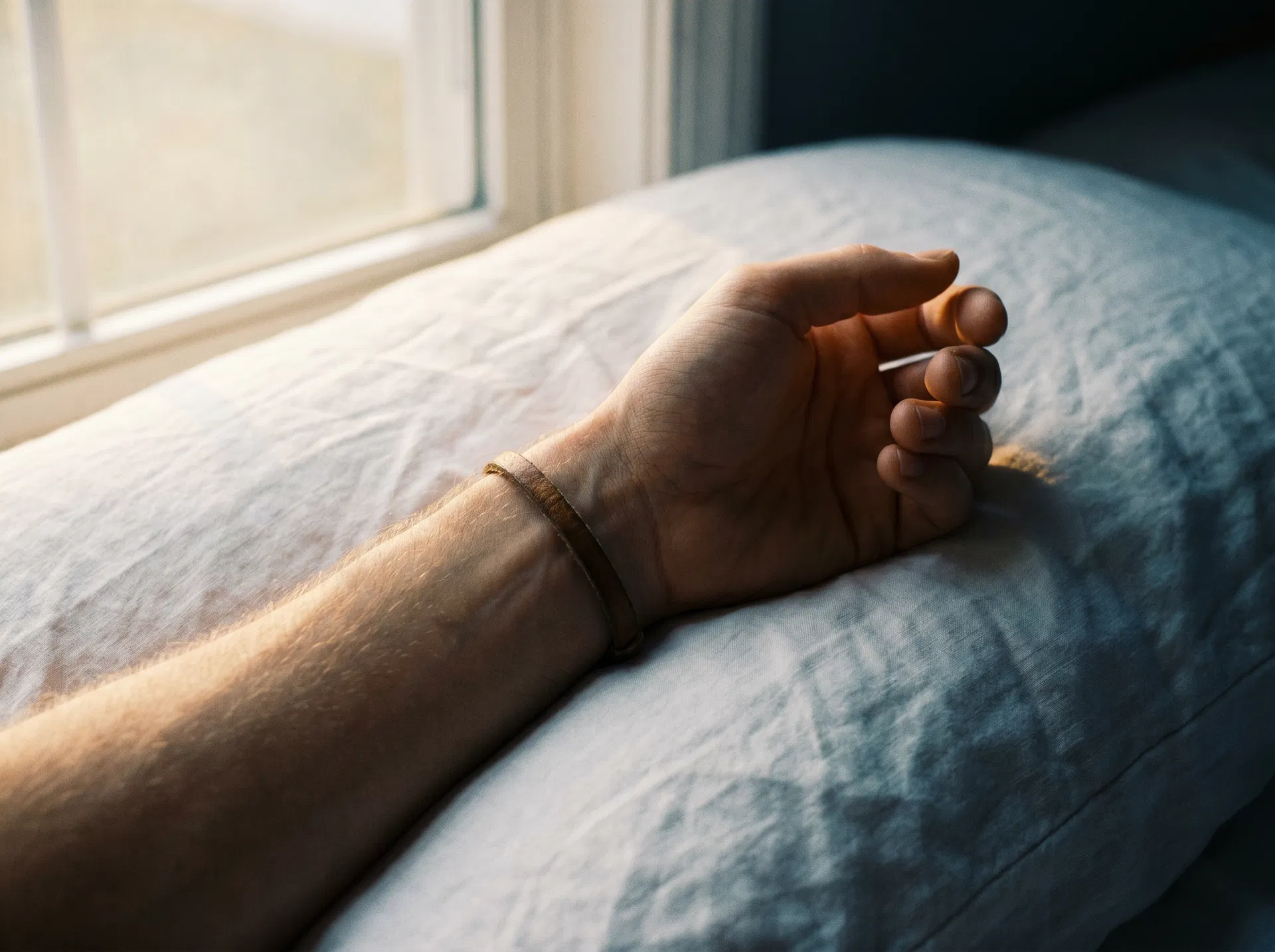
Almost no one with chronic insomnia has a sleep problem. They have a wake-state problem that becomes visible at 2 a.m.
The four upstream variables
- Morning light. Ten minutes of outdoor daylight within thirty minutes of waking sets the cortisol rhythm for the entire day.
- Late-day caffeine. Caffeine has a six-hour half-life. A 3 p.m. coffee is half-strength at 9 p.m. and quarter-strength at 3 a.m.
- Evening blue light. Not the apocalypse some claim, but a real suppressant of melatonin onset. Warm-tone, low-lumen lighting after sunset is a free intervention.
- Sympathetic dominance at bedtime. The number one reason a body cannot sleep is that its nervous system is still in mobilization. The fix is downstream of the nervous system, not the bedroom.
Fix the upstream four for two weeks. If the problem persists, then it is worth investigating sleep-disordered breathing, perimenopause, or thyroid involvement. Skipping the basics in favor of pharmacology is the costliest mistake in the field.
The 14-Day Reset
Read enough? Start the work.
Two weeks of one-to-one nervous system recovery in Miami, with Dr. Mesquite and his team.

About the writer
James Okafor
Science Correspondent
Translates peer-reviewed neuroscience into language that actually changes behavior.